

Tree and shrub roots will find a way to infiltrate municipal sewer systems due to their natural inclination to seek water and nutrients. This can go undetected over time until a loss occurs, either to municipal or private property. Having a well-planned approach to mitigate this risk will help prevent such loss, and the resulting downtime of a costly and lengthy sewer repair. This involves prevention, control and removal of tree root intrusions that can cause pipe blockages, sewage overflows, and reduced hydraulic capacity.
The Nature of Things
Roots respond to weather and climate conditions in various ways. Drought conditions, such as when the water table is low and the soil underneath the tree is dry, will cause roots to “search” for moisture and nutrients. Sewer lines with cracks, gaps or misaligned joints enable nutrient-rich wastewater to escape from its intended route and into the soil, and the roots will thrive. On the flipside, when groundwater is high due to heavy rains and runoff, sewer systems can become stressed, causing leaks into the adjacent ground, providing this same nutrient-rich supply to hungry roots.
Roots can enter a sewer system through hairline cracks, loose or offset joints, deteriorated gaskets or seals, corroded or porous pipe walls, and gaps. Fine root hairs can enter through fissures and then expand into thicker roots and fibrous masses that can partially or completely block the flow of wastewater. They can crack and collapse clay, cast iron, and even poorly installed PVC lines, enabling soil and other ground debris to enter.
Tree species with aggressive and/or invasive root systems:
All poplar species, willows, elm, ash, birch, and silver maple have more aggressive root systems. When any of these species grow in proximity to buildings, it can reasonably be expected that there will be fine roots gaining access to drainage pipes and in some cases, getting into storm water or sewage pipes through the pipe joints. Once inside, the roots develop a plug of fine roots that eventually block the pipe leading to backup of fluids and flooding. Safer species to plant include Japanese Maple, Eastern Redbud, or Crabapple.
Common Indicators of Root Intrusion
- Soggy or sunken spots (sinkholes) in lawns and other areas adjacent or over a sewer line
- The appearance of lush, green patches of lawn
- Mature trees/large shrubs grow near the sewer line
- Visible root systems from large trees proximate to sewer line
- Faster than normal tree or bush growth
- Strong sewer odours
- Residents report sewer backups in showers or floor drains, clogged pipes or slow drains
Who Is Responsible for Sewer Lines?
Canadian courts have accepted the principle that roots growing across a property line can constitute a nuisance. Generally, municipalities are responsible for the main sewer line buried on municipal property, while private and commercial property owners are responsible for the sewer lateral (the pipe connecting their building to the main municipal line). If a municipally owned tree’s root damages a privately-owned sewer pipe, the municipality may be liable for repairs if proven negligent in its maintenance of the tree.
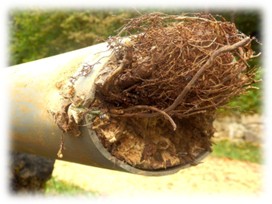
Damage caused by roots from trees growing on private property is the owner’s responsibility, even if it affects the municipal system. Some municipalities in Canada have bylaws stating that the property owner is responsible for the maintenance of the sewer lateral on both the public and private side, but these have been legally challenged by private property owners. In Canada, lawsuits against municipalities regarding sewer failures, including those caused by tree roots, often hinge on whether the damage occurred on public property (the main sewer line) or private property (the lateral line connecting to the building). While property owners are usually responsible for their sewer lateral line to the property line, private property owners may successfully sue if they can prove the municipality was negligent in maintaining trees or main lines, with cases sometimes reaching small claims courts or higher. Municipalities may also counter that the privately-owned portion of the sewer line was old, damaged, or that the owner had not properly maintained it; or they may rely on legislative protection for municipal acts of negligence.
| Characteristics of Sewer Line Materials | Clay Tile: Found in older neighbourhoods. Clay systems feature shorter pipe lengths that require joints every few feet, so there is greater risk of loose joints. Cast Iron: Strong, but susceptible to internal corrosion and joint failure. Concrete and Orangeburg (fibre conduit, not used since the 1970s): Age, pressure and chemical exposure can lead to cracking, blistering and deformation. PVC/ABS: Less likely to deteriorate, but poor installation (misaligned joints and fittings) can create gaps. |
Short Term Techniques to Prevent and Mitigate Root Intrusion
If the pipe is in good structural condition and if root intrusion is minimal and infrequent, or if you’re planning to replace the line in the near future, then a short-term solution may be ideal for you. Here are a few techniques:
Regular Video Camera Inspections: A flexible, waterproof camera, equipped with a location transmitter, can record visuals of fine root hairs or thick root masses – whether isolated or in many locations. It can identify cracks, fractures or missing sections of pipe, offset joints, evidence of prior repairs, or failed patches. The technician can pinpoint the exact location and depth of any problem areas and can determine if the issue is located under driveways, streets, landscaping or structures.
Mechanical Root Cutting Machine: This machine has a rotating cutting head – the blades scrape and cut roots inside the pipe. The downside is that this is not a permanent solution as the roots will eventually grow back. Blades may also damage already-fragile pipes.
Hydro Jetting: High pressure water is used to scour the inside of the pipe to cut and flush out root masses. But this is not a suitable treatment for severely fractured or collapsed pipes, as openings will enable roots to continue to infiltrate afterwards.
Chemical Root Treatments: Foaming root killers and herbicidal treatments can kill roots. This method is less abrasive than mechanical cutting and can slow regrowth for a period of time. Sewer lines should be cleaned 3–4 weeks after chemical treatment to remove dead root masses. Some chemicals used in this process require special handling and disposal.
Root Barriers: Physical barriers (made of plastic or metal) or chemical barriers can be installed underground to redirect root growth away from sewer infrastructure.
Longer Term Techniques to Prevent and Mitigate Root Intrusion
Avoid planting trees or shrubs known to have aggressive and invasive root systems near municipal and private sewer lines.
Excavate and Replace: This is costly due to damage caused to above ground landscaping, roadways and lawns. This also results in more downtime. However, it presents an opportunity to replace older, damaged pipe with a more modern, root resistive material.
Trenchless Repair/Cured-in-Place Pipe Lining (CIPP): A flexible liner saturated with epoxy resin is inserted into the existing pipe, then cured in place to form a new, seamless pipe inside the old one.
- Fills in joints and gaps
- Structurally strong, corrosion-resistant pipe that can last 50+ years
- Can be completed in 1-2 days
- Costs 30-50% less than excavate-and-replace option when landscaping and structural work is not required
- Less downtime for businesses and residents
- Less risk of collateral damage to utilities and foundations
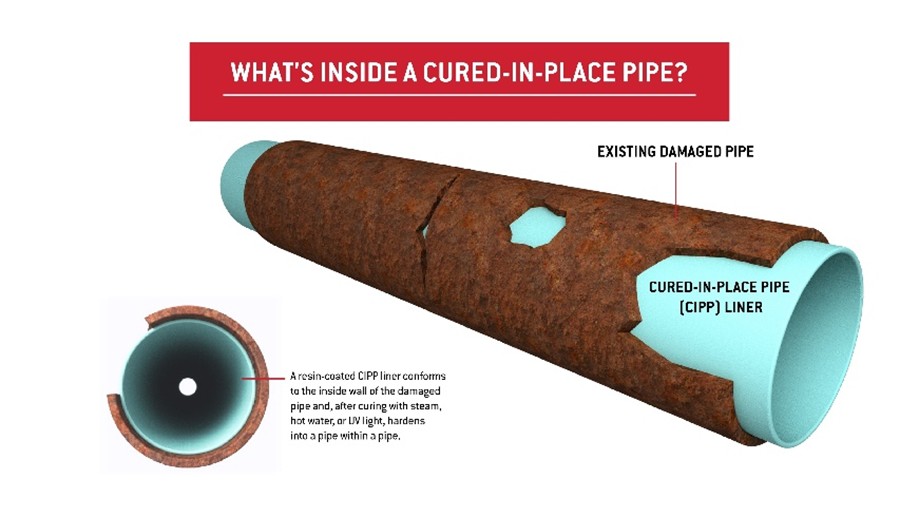
Epoxy Coating: The application of a specialized epoxy resin to the interior of sewer lines. This process creates a protective barrier that seals leaks, prevents corrosion, and enhances the structural integrity of the pipe. The epoxy is applied without digging trenches, minimizing disruption to the surrounding area.
Post-Loss Preventative Measures
Backwater valve incentive programs: Some municipalities provide backwater valve incentive programs to private or commercial property owners to be installed after a loss. Some personal lines insurance companies will provide more favourable property insurance rates when such a device has been installed.
Financial Aid: As an example, Swift Current, Saskatchewan has a program to partner with private property owners that may pay 50% of a plumber’s root-cutting bill if the roots enter the private sewer lateral from a tree growing on municipal property.
Demonstrate Proactive Reasonability: Having bylaws that clearly state the municipality’s responsibilities relating to root intrusion and sewer lines, as well as a root mitigation policy that outlines the municipality’s ongoing preventative measures, coupled with heightened awareness on the part of private property owners, can help to establish clear lanes of responsibility to reduce disputes, claims and litigation.
A city-owned tree could cost them $10,000 in plumbing repairs. They say the city told them ‘it’s not our problem’ | Toronto Star
Tree Roots – Risk Management | City of Winnipeg
“Getting to the Root of the Matter – Part 1” – Trees and the Law | Dunster & Associates
“Getting to the Root of the Matter – Part 2” – Trees and the Law | Dunster & Associates
While municipalities with aging sewer infrastructure and constrained budgets may have the most immediate interest in this issue, integrating these considerations into the planning of new developments can help prevent significant and unnecessary costs in the future.
For more information, contact your Risk Advisor:
Jonathan Stone, FCIP
Insurance and Risk Specialist
506-252-7975
jonathan@canoeinsurance.ca