

We are heading into another potentially dry summer in the Maritimes, so now is the time to begin thinking and working towards wildfire preparedness. Wildfires did occur in New Brunswick last summer, most notably in the Miramichi area and in Irishtown, just north of Moncton. While municipal buildings were not damaged in those events, the conditions that allowed those fires to spread remain a concern, and municipalities should continue to take proactive steps to protect their assets.
Canoe Insurance, with its roots in Alberta, insures municipalities across the province and has partnered with FireSmart™ to ensure our members, including those in the Maritimes, are informed and supported when implementing leading approaches to community wildfire mitigation. Information and resources for both residents and communities can be found on the various provincial FireSmart™ websites, but the volume of resources varies between them. While many municipal leaders are aware of their own province’s FireSmart™ website, we encourage you to browse the FireSmart™ Alberta website to see the scope of resources available to communities there. Of particular interest on the Alberta site is information about the “Community Scorecard” and the “Community Scale.”
FireSmart™ Websites
FireSmart NB: FireSmart
FireSmart PEI: FireSmart | Government of Prince Edward Island
FireSmart Alberta: FireSmart Alberta – FireSmart Alberta
Community Preparation
Here are some great steps to take to ensure the community is ready for the season:
- Ensure fire department has completed their pre-season checks.
- Ensure mutual aid agreements are up to date.
- Review your Emergency Response Plan (ERP).
- Train or refresh your staff on the ERP.
- Make everyone aware who is responsible for executing the ERP.
- Review insurable assets and ensure adequate coverage is in place.
- Ensure any newly acquired assets are insured (i.e.: buildings, equipment, vehicles).
- Complete building assessments, making sure to note any dry or dead vegetation and then address necessary concerns.
- Regularly review Wildfire Hazard Assessments (these can be requested through local wildfire officers).
- Conduct a walk-through of building(s) to be used for emergency evacuation:
- Are there any immediate concerns that need to be addressed?
- Are there adequate supplies?
- What is the building condition overall?
- Ensure a Public Awareness Plan is in place:
- Where can your ratepayers look for up-to-date information?
- How is this communicated to your ratepayers?
- In areas prone to wildfires, encourage everyone to keep a go-bag in their vehicle throughout the season.
When a wildfire starts, it can be mere hours until it becomes an emergency. Make sure that everyone is ready for the season and that plans are in place should the worse-case scenario happen.
Property Preparedness – Public and Private
It is critical to ensure all properties are adequately prepared for wildfire season. Below is a guide on how to FireSmart™ any property in the spring to warrant its readiness:
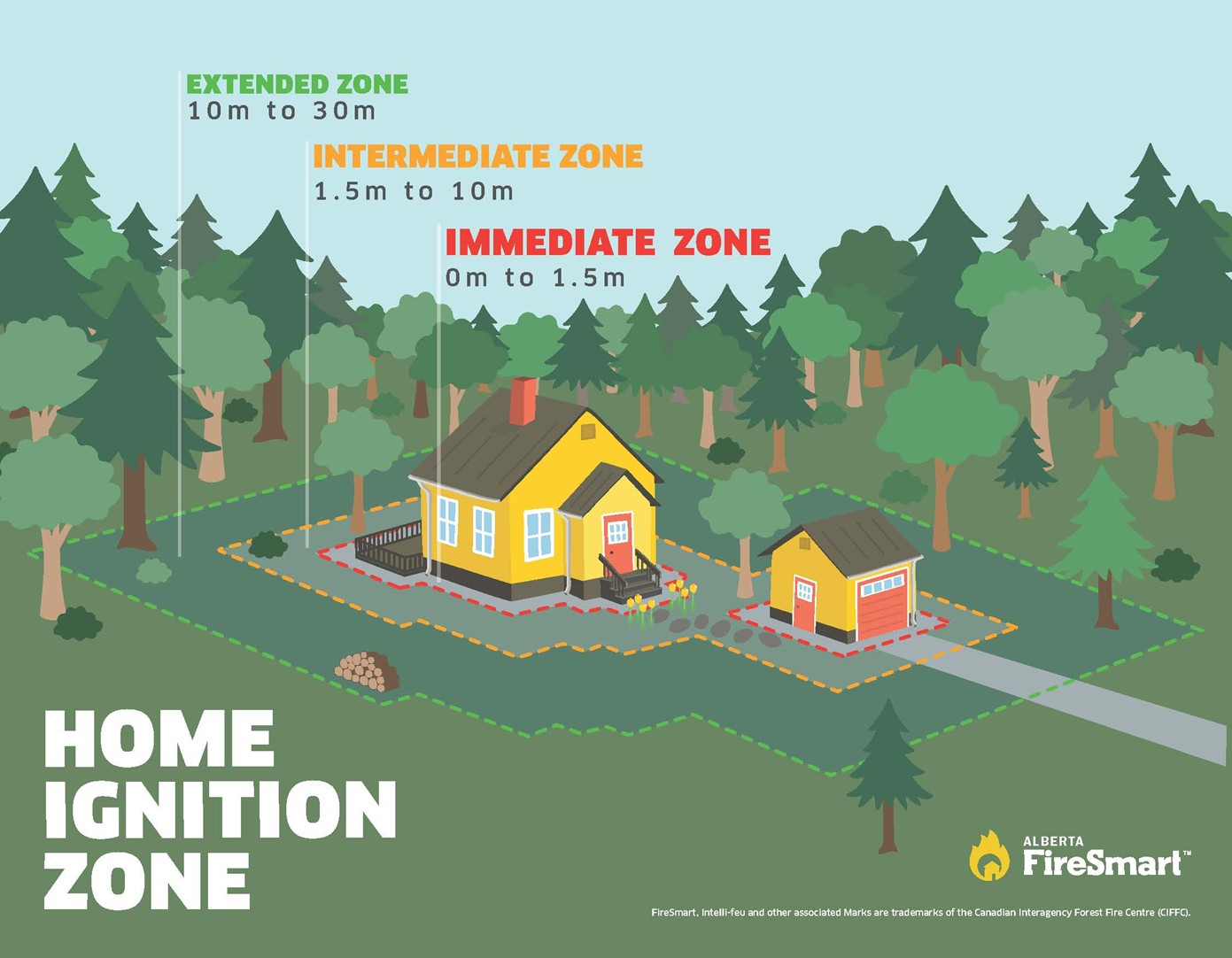
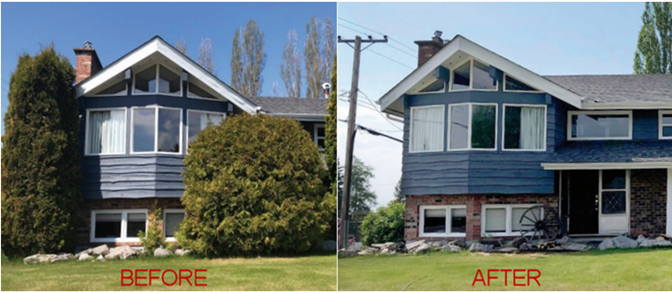
Dry leaves, branches and other debris may have accumulated around your building prior to this winter’s snowfall. To minimize the risk of fire, take the time to clean all debris and flammable materials. Properly dispose of any waste.
Gutter and roof cleaning in the spring is a crucial way to ensure that, if wildfire approaches, there are no flammable materials in those areas that can easily ignite from falling embers. We recommend a month inspection of gutters to ensure they are clear of debris. You can also install gutter guards to prevent debris from accumulating in them.
Maintaining your lawn or green spaces is vital to ensure the area does not become dry during the wildfire season. Water green spaces often, as well as all shrubs and plants. Pay particular attention to any green space within close proximity of the building.
Certain plants can be more flammable than others. Something to consider when checking the property is looking for plants with these qualities:
- Leaves that have a strong odor when crushed.
- Fine, dry or dead material, like bark, twigs, needles and leaves collects within plants.
- Trees, branches and stems with a gummy sap.
These qualities are highly flammable and could add fuel to a wildfire if one approaches. Look to add plants that do not provide significant fuel to fires. These plants would have the following qualities:
- Moist leaves.
- Water like sap with little to no odor.
- Limited collection of dry or dead materials.
- Prune Trees
There are a wide variety of trees that are more resistant to fire that you can include in your landscaping. Trees such as maple, birch, popular, aspen, cherry and alder are all more fire resistant than coniferous trees (those possessing cones and needles, such as pine and fir). As part of your spring cleaning, take time to prune any branches that are within two meters of the ground and remove any flammable debris that may have fallen.
- Create a Wildfire Evacuation Plan
Having a detailed plan in place can be crucial for responding quickly should a wildfire approach. An effective plan will help ensure a timely response. Have an emergency wildfire checklist – ensuring all items are completed when evacuating – to guarantee a successful evacuation. Items on the checklist should include:
- Does the power and water to the building need to be shut down?
- Are gates left open so emergency responders can access the area?
- Do you have a sign on the exterior door(s) indicating the building has been cleared of all personnel? (This tip is relevant for both work and at home)
- Have you cleared away any debris on exterior of building?
- Are combustibles a safe distance from building?
Additional resources and an FAQ are available below.
If you have any questions, please reach out to your risk advisor at risk@rmainsurance.com or visit RMAinsurance.com.
What happens if I send my fire trucks to another area to help? Am I covered?
There is coverage to protect the fire truck against damage and liability. It is always within best practices to ensure that you have a mutual aid agreement, and that the agreement is up to date.
What is covered if I need to commandeer equipment to assist in the fire efforts?
COMMANDEERED EQUIPMENT
It is understood and agreed that your Policy is hereby extended to cover property of a similar nature to that insured which has been commandeered by the Named Insured for their use, provided all such property is reported to the Insurer(s) within Thirty (30) days from the date of commandeering. It is agreed that an Additional Premium will be paid by the Insured at the rate applicable under your Policy, pro-rated from the date of commandeering to the expiration or termination thereof.
It is further understood and agreed that the Limit of Liability as respects to commandeered equipment shall not exceed the amount stated in clause 8 of the Declarations hereof.
What evacuation coverage is available?
EMERGENCY EVACUATION EXPENSE
Subject to a limit of Two Hundred and Fifty Thousand Dollars ($250,000) any one occurrence, your Policy is extended to cover all reasonable and necessary evacuation expenses incurred by the Insured as a result of compliance with a mandatory evacuation order which requires the evacuation of a covered location(s) and first occurs during the period of insurance.
This Additional Coverage is provided for up to Thirty (30) days after the mandatory evacuation order with respect to each covered location, but not for any period of time beyond Ninety-Six (96) hours after the date and time the appropriate civil authority allows a return to each covered location (hereinafter, this period of time is referred to as the evacuation period).
The following additional definitions apply to this extension:
- Evacuation expenses means the reasonable and necessary expenses incurred during the evacuation period to transport and house designated persons. Evacuation expenses includes evacuation of designated persons, maintenance of designated persons in another location, and the return of designated persons to the covered location or, if the covered location is not habitable, to a suitable alternative location.
- Designated persons means:
i. Residents and lawful occupants at a covered location; and/or
ii. Those employees who are essential to implement the mandatory evacuation order at a covered location.
- 2025 RMA & Wildfire Defence Systems Canada – White Paper
- RMA Wildfire Program Assistance Guide
- FireSmart Alberta
- Government of Alberta – Alberta Wildfire
- Alberta Chamber – Wildfire Support
- Wildfire Defense Systems
- Government of Canada – Wildfires Federal Response
- Fire & Flood Emergency Systems Ltd.
- Forest Resource Improvement Association of Alberta